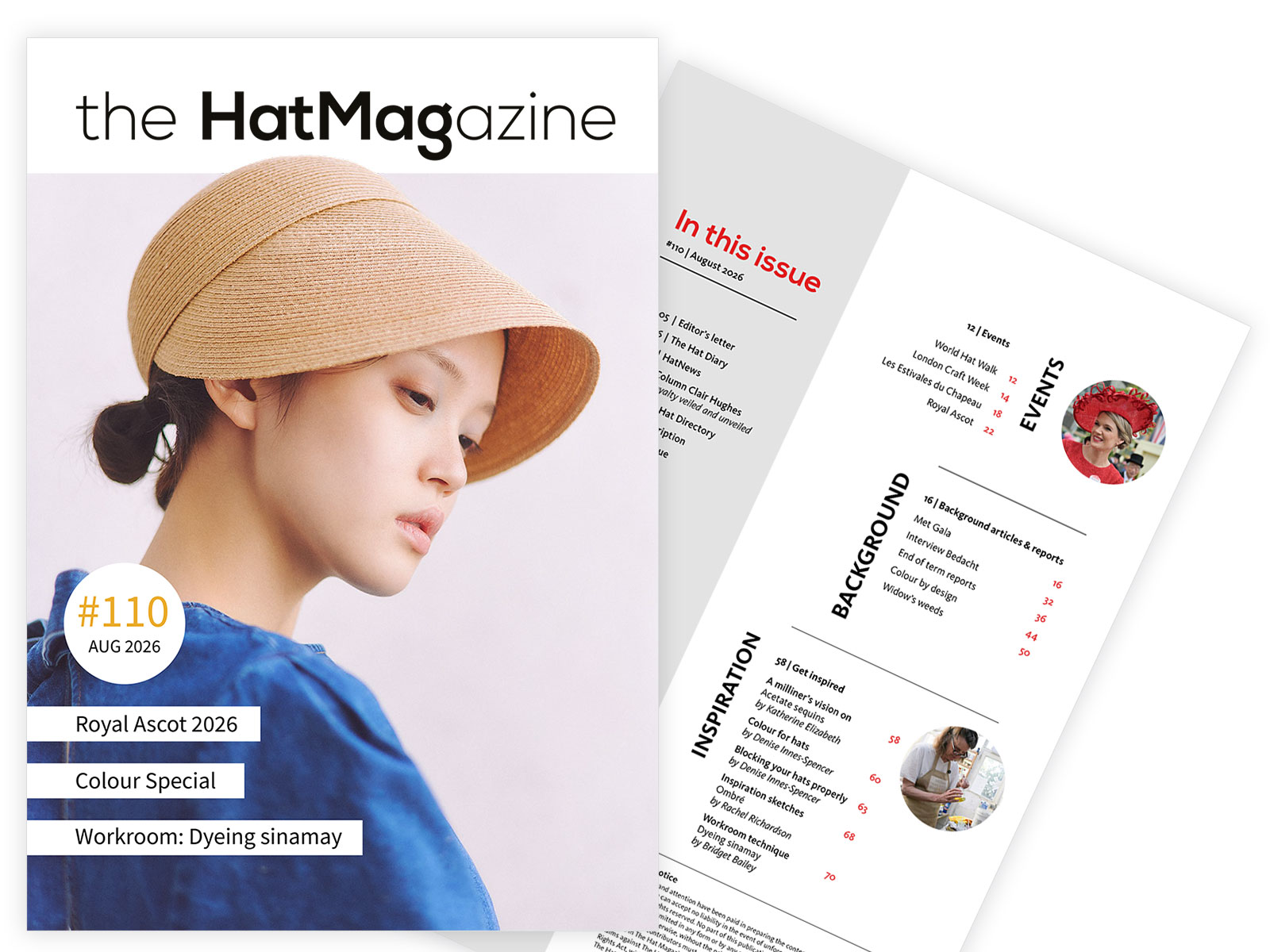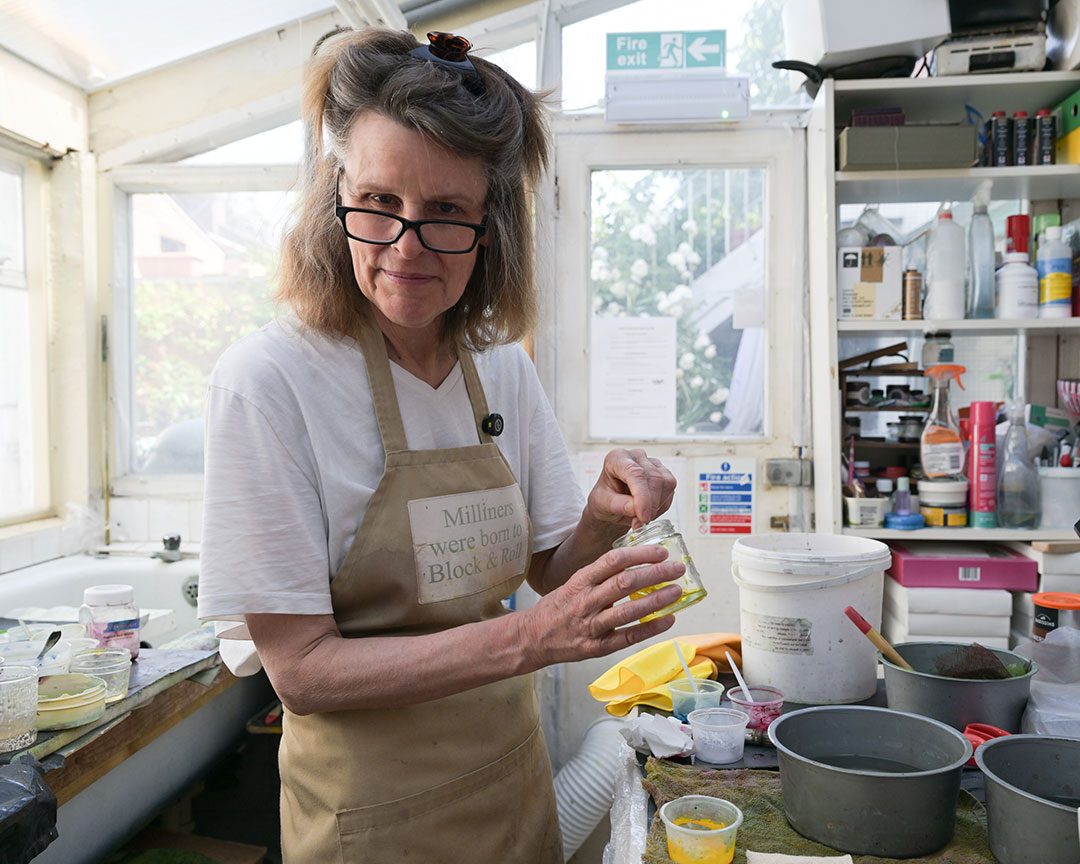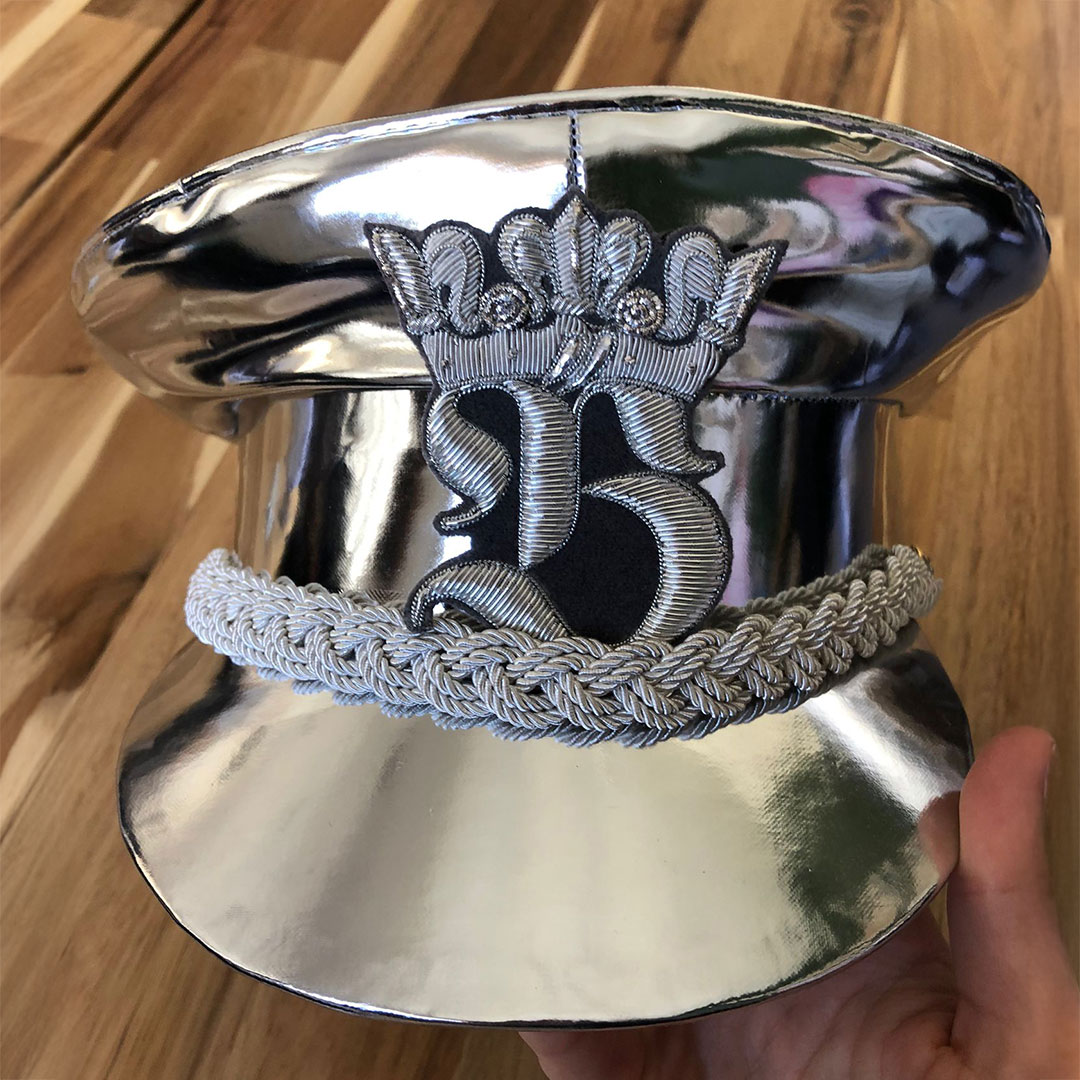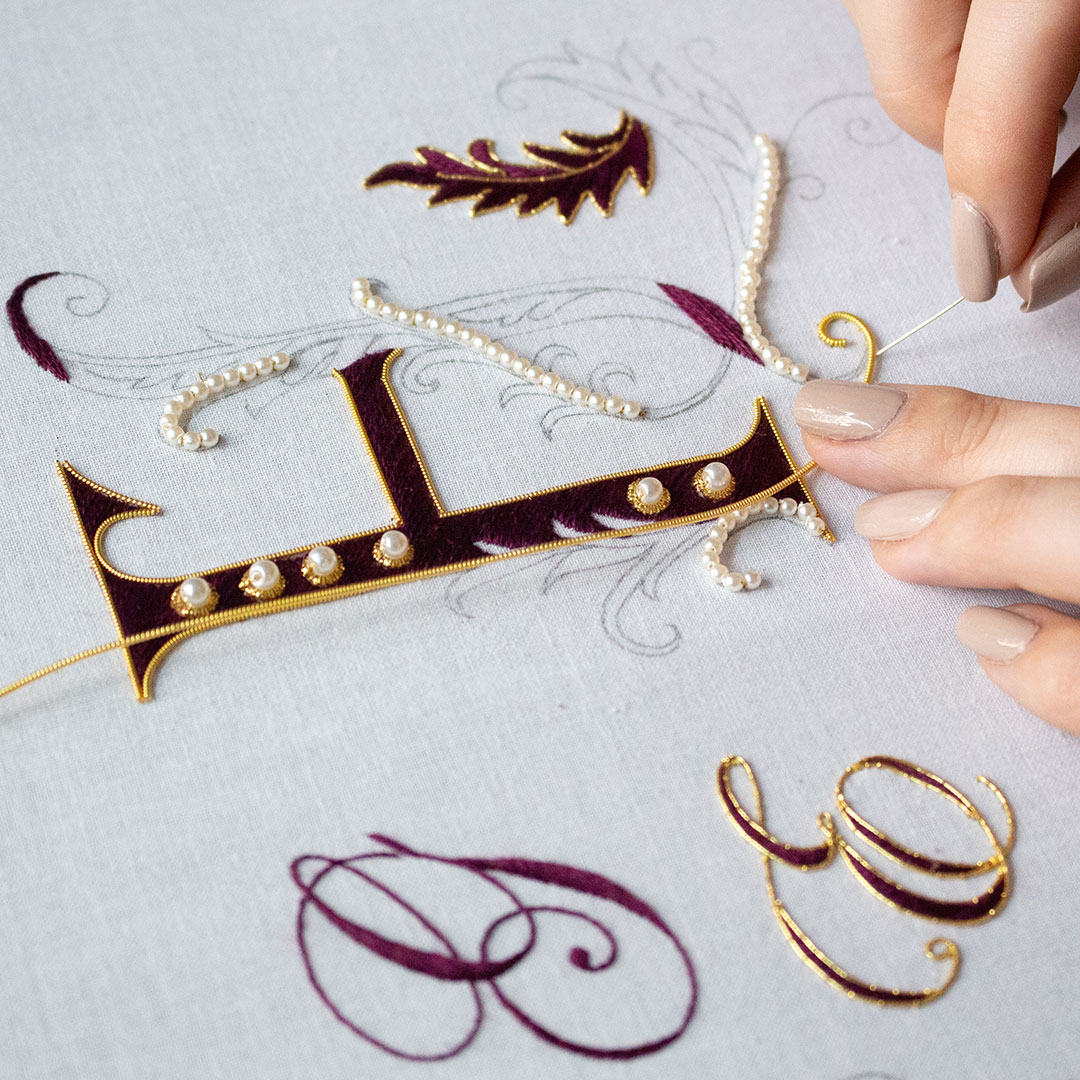
This blog brings together our latest updates, announcements and behind-the-scenes moments. You’ll find the same posts we share on Instagram and Facebook, collected here in one place.
February 2026 Issue
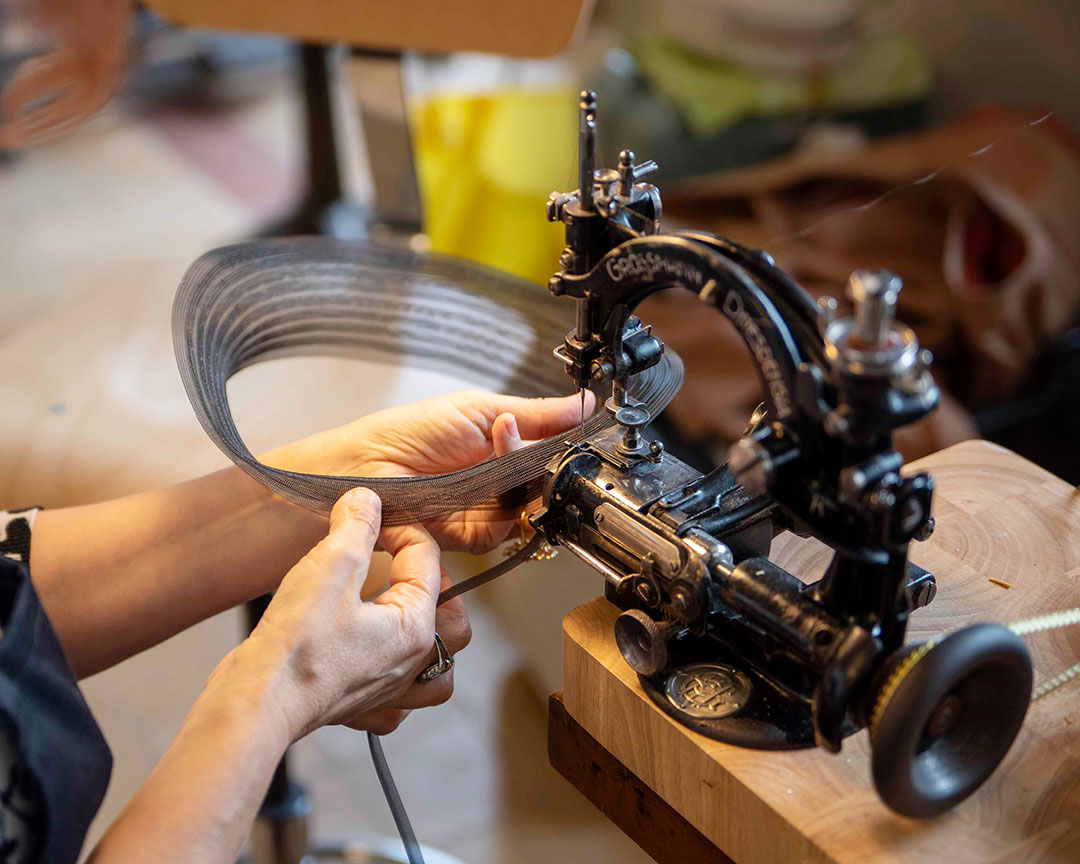
Issue 108 (February 2026) of The Hat Magazine is out! In this issue: Interview with Misa Harada, Made in Japan, A journey through hat museums, Veiling facts, Workroom technique 'Covered wire frame' by Marianne Jongkind, and more! Not yet a subscriber? Order a copy of this issue on the back issues page or become an online subscriber. Hat on cover by Ding Yan from CHICMAX.
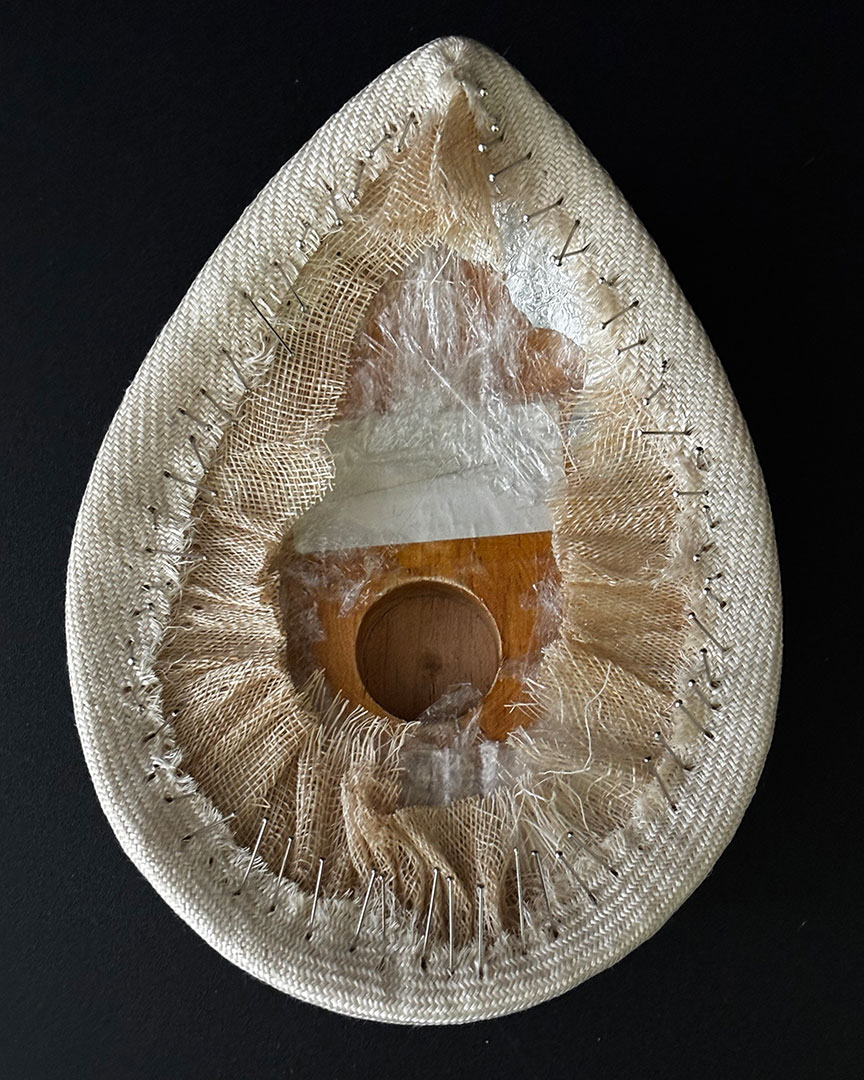
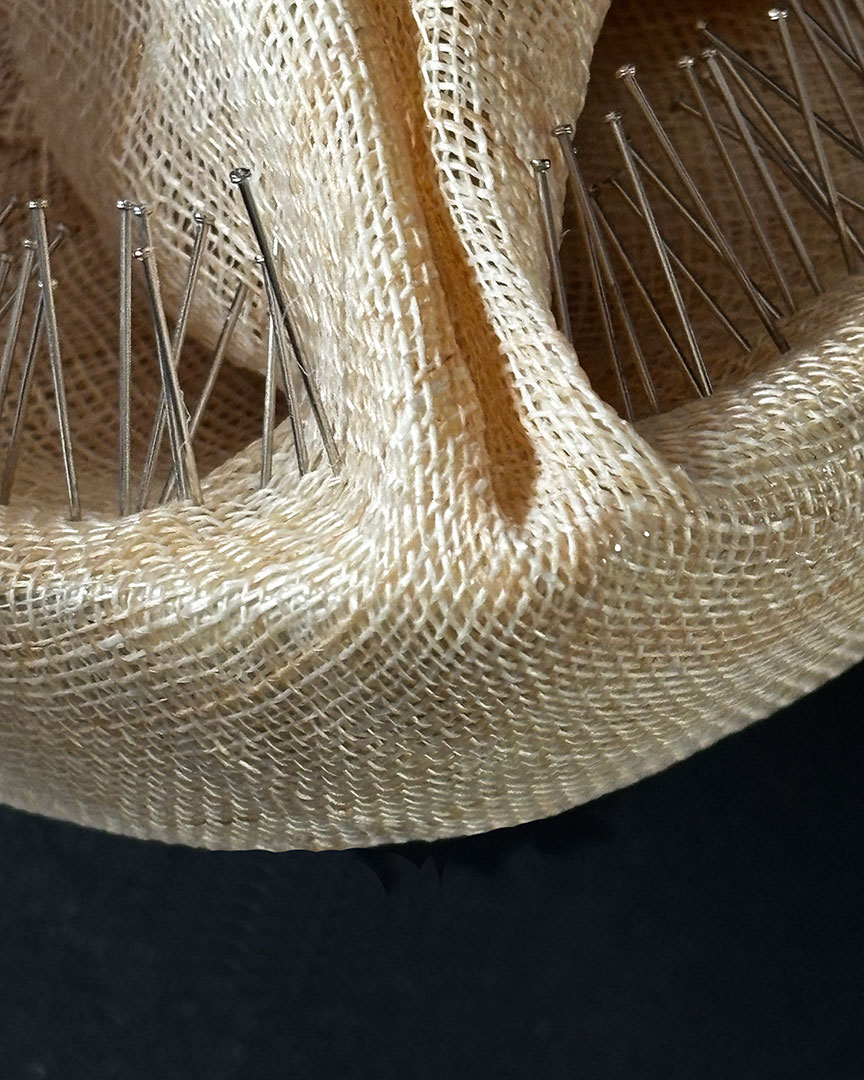
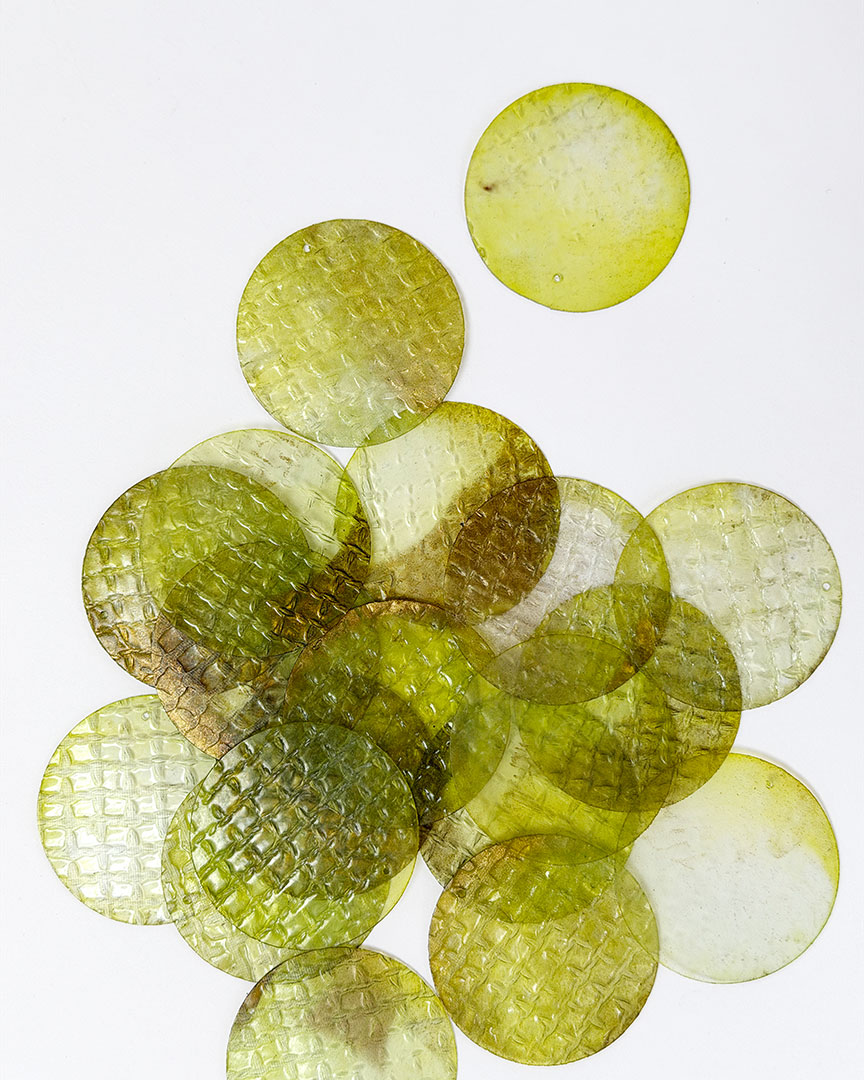
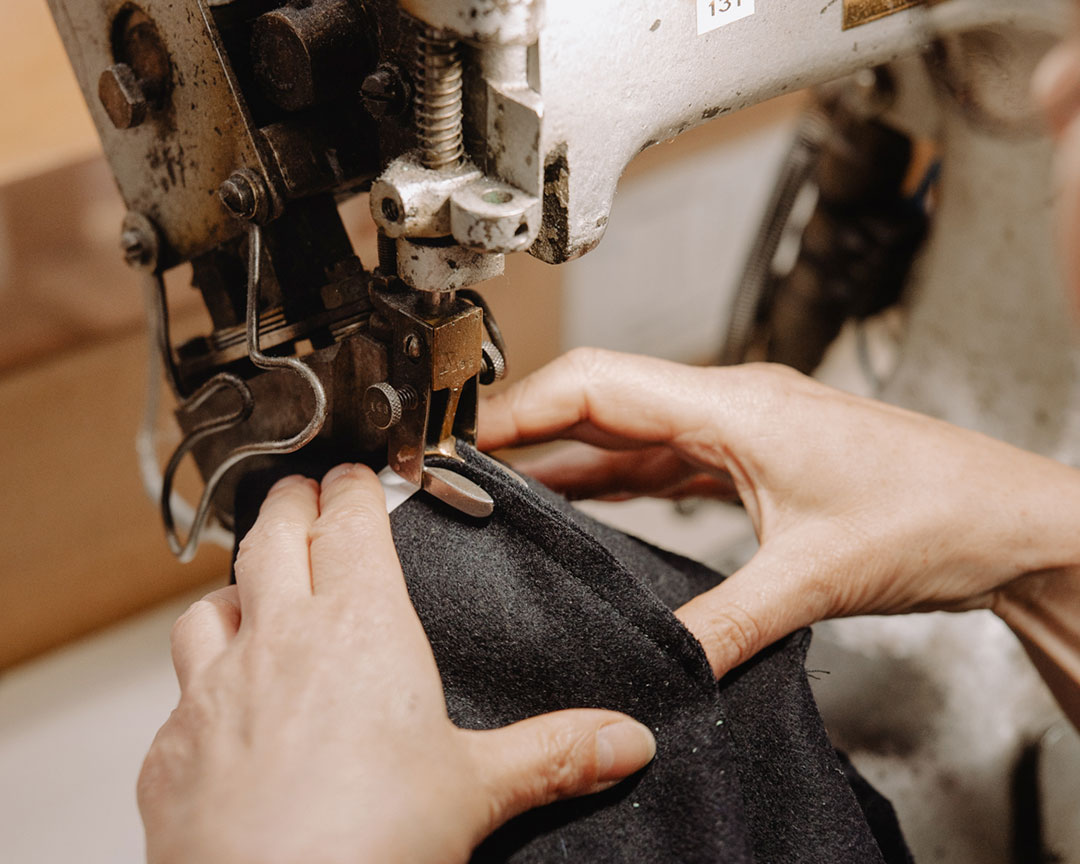
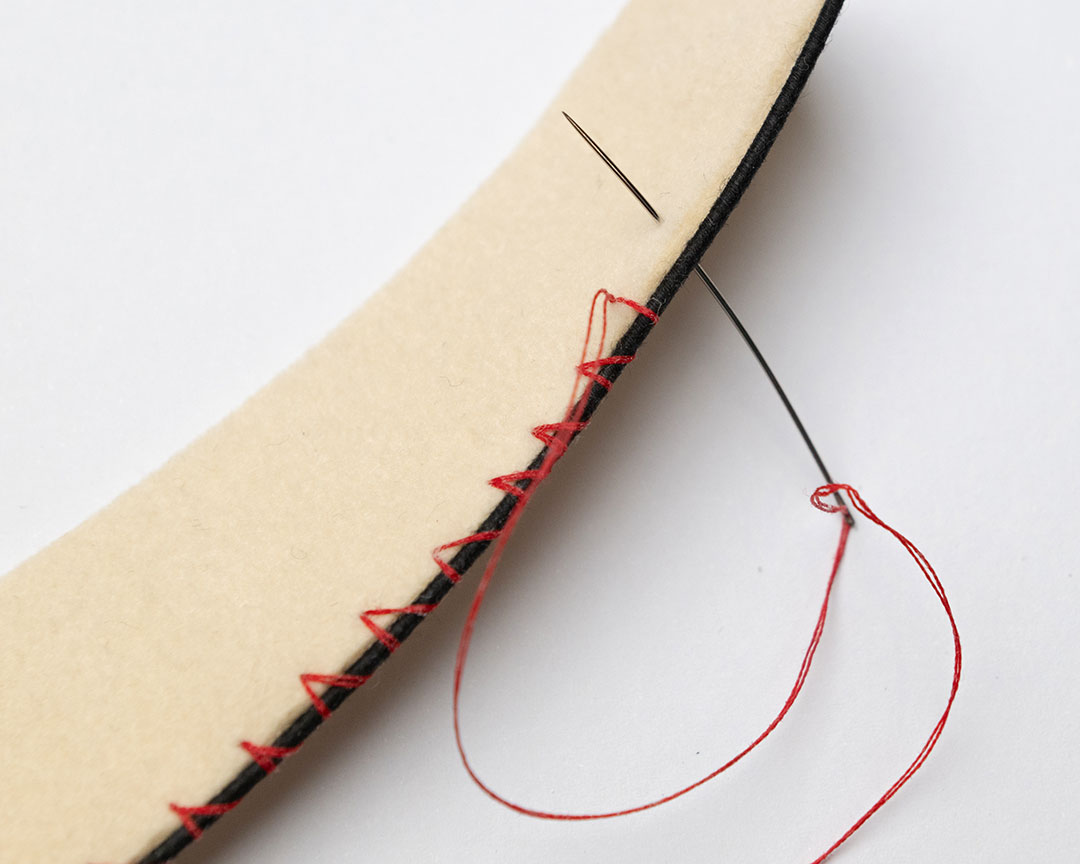
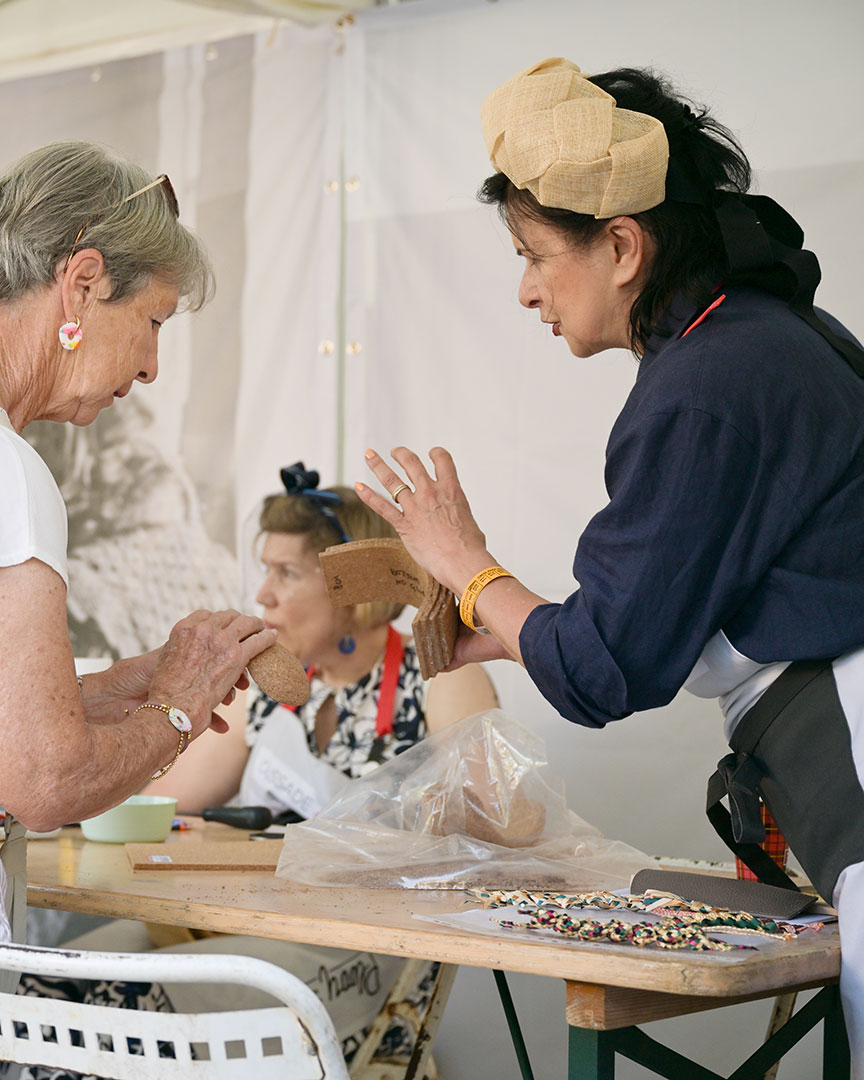
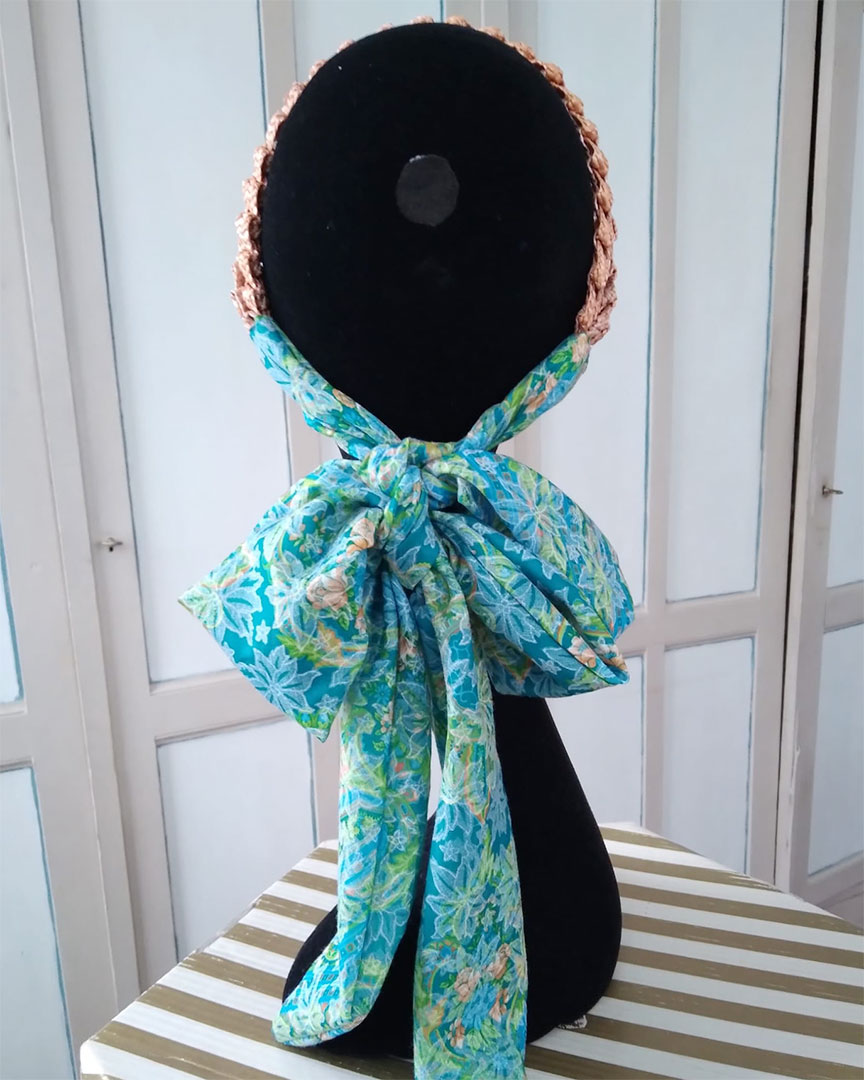
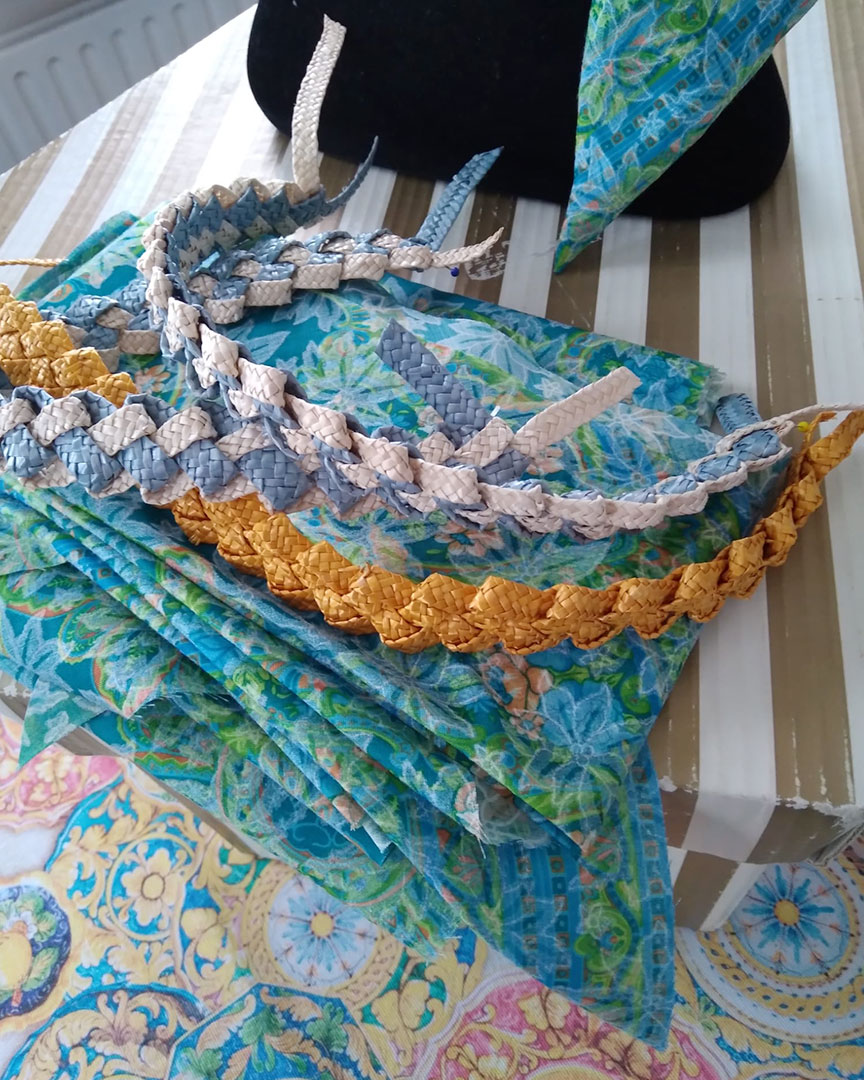
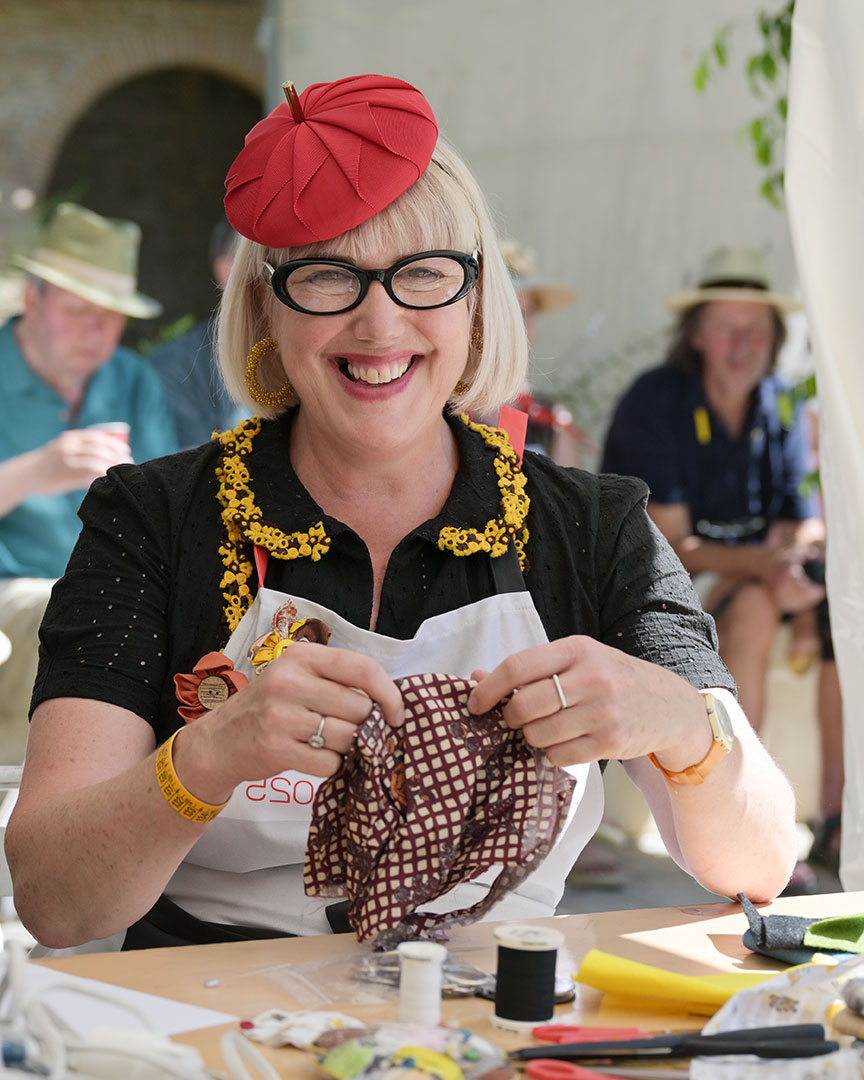
As a print subscriber, you probably already know that your subscription includes access to the online version of The Hat Magazine. But did you know that reading your issues online offers more than just convenience? You can zoom in on the finest details, make notes, bookmark pages, and search across issues — perfect for revisiting articles, techniques, and interviews whenever you need them. Images from Denise Innes-Spencer's tips & techniques articles in issues 100, 101, 102, 103, 104 and 107. Not a subscriber? Order a copy of these issues on the back issues page.
The Perfect Hat?
In her November 2025 column ‘The Perfect Hat?’, Clair Hughes reflects on a deceptively simple question, sparked by a piece in the Financial Times. The answer, it turns out, has less to do with silk toppers or perfect proportions, and everything with meaning, context, and what dress historian Anne Hollander called ‘the accustomed frame of how things look’. As male hats slipped out of everyday business life in the 1960’s and 1970’s, caps quietly stepped in – adaptable, practical, and socially negotiable. From baseball caps to flat caps, bakerboys and shepherd styles, caps have proved remarkably resilient, able to move between work, leisure, and class with ease. That adaptability is something we see clearly on the trade show floor. At events such as Pitti Uomo and Who’s Next, caps have been a strong favourite in hat brands’ collections for several years now – not as a trend, but as a modern solution to an old problem.


A professional in the art of shaping a wooden block as well as crafting a finished hat, Sébastien Tessier (France) is recognised for his mastery of exceptional skills and techniques. With this dual expertise, he has long enjoyed supporting hat designers in the implementation of their projects. Looking back, one could say that the beginning of his career was triggered by a series of coincidences before he became the passionate hatter and block maker he is today. Read the full story in the November 2025 issue (no. 107).
This weekend we visited Who’s Next in Paris. There, we reconnected with several brands with a long history in hat manufacturing that were exhibiting at the show for the first time. One of them was City Sport from Belgium – a true cap specialist with more than a century of experience, having celebrated its 125th anniversary in 2023 (see Issue 96, February 2023). For more information about the trends for A/W 26/27, don’t miss our trends report in the May 2026 issue of The Hat Magazine.
Yesterday, we met with London-based hat maker Lock & Co Hatters at trade show Pitti Uomo in Florence, Italy. Founded in 1676, Lock & Co Hatters will mark its 350th anniversary this year, making it the world’s oldest hat shop still in operation. For more information about the trends for A/W 26/27, don’t miss our trends report in the May 2026 issue of The Hat Magazine.
Founded in 1945, Kacprzak Hat Blocks is now in its third generation, combining hand turning, foundry knowledge and digital tools in a small Polish workshop. Today, Julian Kacprzak works alongside his father and brother, producing blocks entirely by hand while using technology to speed up processes and keep blocks affordable. The company’s 80th anniversary in 2025 was marked not by nostalgia, but by momentum, including its first in-person sales abroad at Barcelona Hat Days. Read more about Kacprzak Hat Blocks in the November 2025 issue (no. 107). In the photos, three generations of Kacprzak: grandfather, father, Julian and his brother
A beautifully covered hat starts with what you don’t see. In the November 2025 issue (no. 107), Denise-Innes Spencer shares practical tips and techniques in her article What foundation materials to use for covered hats, focusing on how the right foundation allows the material to perform at its best.
Luton’s hat-making heritage is entering a new chapter. In the November 2025 issue, we explore the story behind the Luton Hat Company – a venture led by Nick Horn, whose family has been part of the town’s industry for nearly 300 years. Building on the legacy of Baxter Hart & Abraham, the new company brings together restored historic machinery, over 400 aluminium blocks and decades of specialist knowledge to support today’s makers. From offering blocking services to developing accredited training and apprenticeships, the project aims to safeguard skills that are fast disappearing. Read the full article in the November 2025 issue (no. 107). Last photo: One of the blocking machines operating at its previous location, the W. Wright factory.
Stiffening solutions can be applied in several concentrations. The amount of dilution varies according to both the type of stiffener and the fabric or straw being treated. Some stiffeners can alter the appearance of the surface once dry, leaving a slight sheen – or causing darker tones, particularly on pale colours. For this reason, it is advisable to test the solution on a small sample of the material before treating the whole piece. For an overview of the most commonly used stiffeners and their applications, take a look at the posterside of the 2026 calendar that comes with the November 2025 issue of the magazine (no. 107).
Unlock new possibilities in your workroom with the ‘Around the block’ article in our November 2025 issue. Hat blocks are the foundation of hat making, but when the exact shape isn’t to hand, creativity takes over. This feature highlights the resourcefulness of makers around the world who adapt, improvise and innovate to achieve the perfect made-to-measure block, using techniques that range from vintage sparterie to contemporary workroom solutions.
4 DECEMBER 2025
Daily Objects sketches
Who says inspiration can’t be found in the everyday? Move over Surrealists - Sophie Beale’s ‘Daily Objects’ sketches in the November 2025 issue prove that creativity often starts right in your kitchen or in your living room! Check out how the familiar is transformed into fresh millinery ideas that feel both clever and beautifully considered in the The Hat Magazine no. 107.
You don’t need a full library of wooden blocks to achieve the shapes you want. Sometimes all it takes is a smart workaround with the blocks you already own. In the November 2025 issue, Ian Bennett demonstrates how to build your own crown block using nothing more than a basic dome block and pattern paper. A practical technique to expand your hat making possibilities! The blue hat was created by Ian for the theatre production ‘By Royal Appointment’, which features several hats worn by Queen Elizabeth during her reign.
Issue 107 (November 2025) is out! In this issue: Interview with Sebastien Tessier, Trends report S/S 2026, Event reports, Make or adjust a block, Foundation materials for covered hats, Workroom technique ‘Card block with tip’ by Ian Bennett, Wall/desk planner 2026 with ‘Stiffening solutions’ on the poster side and more! Not yet a subscriber? Order a copy of this issue on the back issues pages on the website or become an online subscriber. Hat on magazine cover by Nicki Marquardt Hat on calendar cover by Cristina de Prada